If you scroll Upper West Side listings and see the phrase Classic Six, you are not alone in wondering what that actually means. You want space, character, and a layout that works for real life, not just a floor plan. In this guide, you will learn exactly what counts as a Classic Six on the UWS, why these prewar homes are prized, how co-op rules shape renovations, and what to check before you buy or sell. Let’s dive in.
What a Classic Six means on the UWS
A Classic Six is a prewar New York apartment layout with six principal rooms: a living room, a formal dining room, a kitchen, two full-size bedrooms, and a smaller third bedroom often called a maid’s room or staff room. Bathrooms, closets, and service spaces do not count toward the six.
On the Upper West Side, you will see Classic Sixes mostly in pre–World War II co-ops built from the late 1800s through the 1930s. These homes usually have a central foyer or gallery that leads to the living and dining rooms, with bedrooms grouped away from the public rooms. The smaller third bedroom often sits off the kitchen or along a service corridor.
Classic Sixes vary widely in size, from roughly 1,000 to more than 1,800 square feet depending on the building and the line. High ceilings, often in the 9 to 11 foot range or higher, are common and contribute to the scale and feel of these homes.
How the “six” is counted today
Historically, kitchens were not always counted the same way in room totals, and bathrooms never counted toward the six. Modern listings may describe the home by bedrooms and baths instead, such as “3BR/1.5BA with a formal dining room.” The key is that a true Classic Six preserves the formal divisions: separate living room and dining room, a defined kitchen, two main bedrooms, and a smaller third bedroom.
Room-by-room layout
- Foyer or gallery: A defined entry space that creates a gracious arrival and connects to the reception rooms.
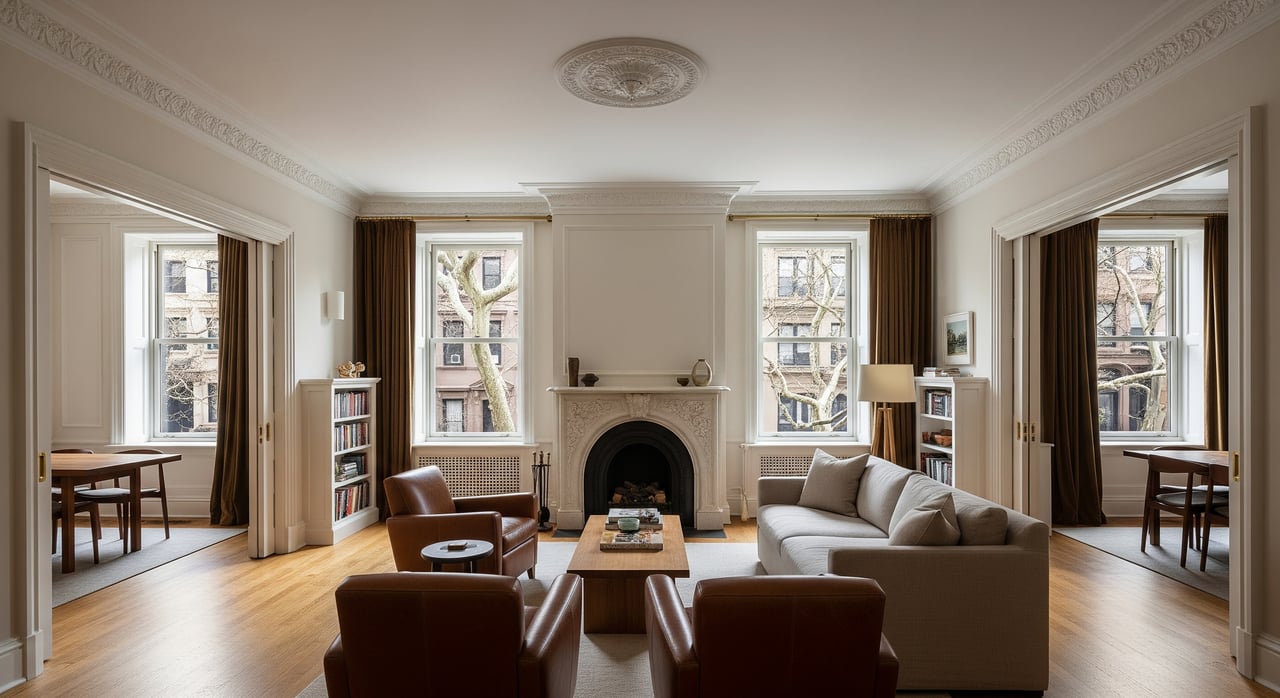
- Living room and dining room: Side-by-side or front-to-back, often with wide openings or pocket doors between them.
- Kitchen: Separate from the dining room, sometimes with a service entrance.
- Two main bedrooms: Positioned for privacy away from the entertaining spaces.
- Maid’s room: Smaller third bedroom, typically off the kitchen or along a service corridor; often used today as a home office, nursery, guest room, or walk-in closet.
Prewar details that define value
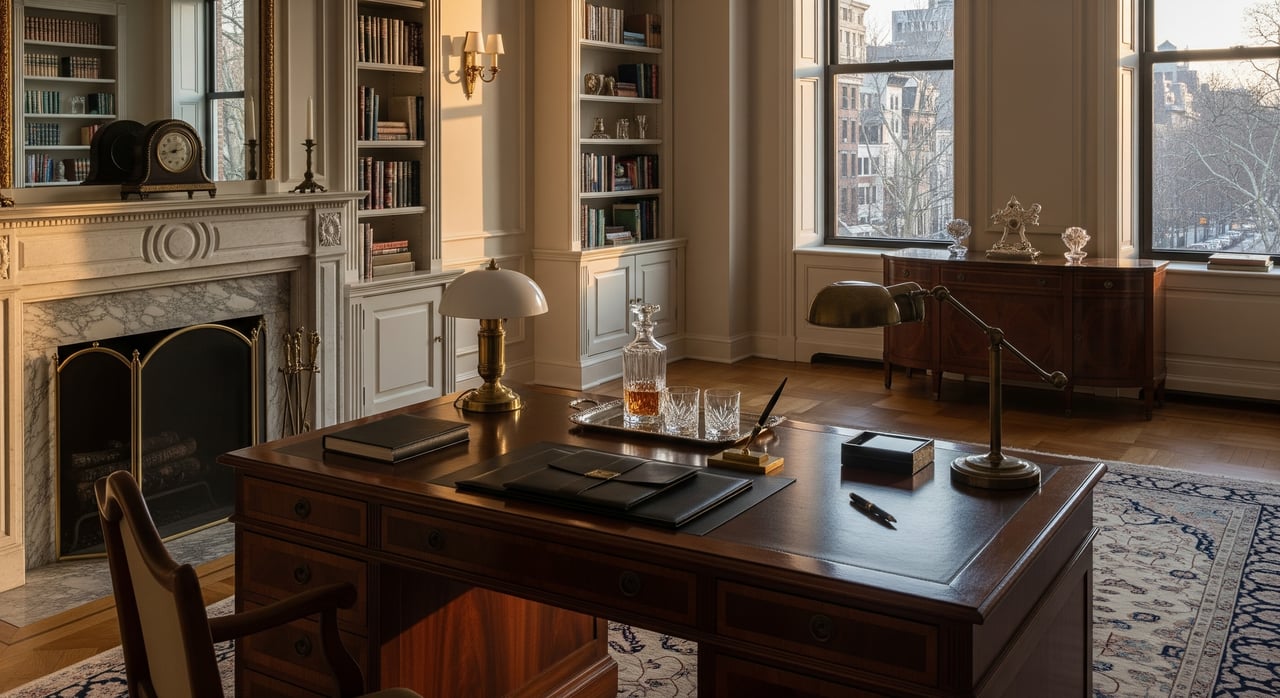
Classic Six buyers expect prewar craftsmanship. You will often find original plaster and crown moldings, ceiling medallions, tall baseboards, pocket doors, decorative or wood-burning fireplaces, built-ins, and original hardwood floors. High ceilings are part of the appeal and make rooms feel larger and brighter.
Provenance matters on the Upper West Side. Many prewar co-ops were designed by well-known local architects, and a building’s original developer, year of construction, and preserved details can influence pricing and demand. Blocks near Central Park or Riverside Park, full-service doorman buildings, and addresses within local landmark districts also tend to command premiums.
Beyond architecture, building-level factors play a major role. Strong reserves, a low or well-managed underlying mortgage, and clear, favorable sublet and renovation policies can improve resale liquidity. The co-op board’s reputation and the clarity of its house rules also shape the owner experience.
Renovations buyers and sellers consider
Most updates aim to balance modern function with prewar character. Sellers often refresh kitchens and baths while preserving original millwork and moldings. Opening the kitchen partially into the dining room, or enlarging a passthrough, is common when boards allow it. The maid’s room is frequently repurposed as a home office, a dressing room, or combined with a nearby bath to create an en-suite.
Windows may be restored or replaced subject to building and, if applicable, landmark rules. Mechanical updates, such as mini-split air conditioning or radiator changes, typically require architectural plans and co-op approval. Structural changes that move load-bearing walls or create wide open-plan spaces need engineer or architect plans, city permits, and formal board consent.
Co-op process and approvals
Expect to sign an alteration agreement and meet contractor insurance requirements. Buildings set construction hours and seasonal restrictions. Work that requires permits must be filed with the NYC Department of Buildings. If your building sits in a landmark district, exterior work or certain window replacements may require Landmarks Preservation Commission approvals.
Cost and timing basics
Prewar materials like plaster and detailed moldings add complexity and cost compared to modern drywall. Older buildings may require asbestos or lead paint remediation. Board approval timelines vary from a few weeks to several months, depending on the board calendar and the scope of work. Plan budgets and move dates with a cushion.
How layout and provenance affect pricing
Buyers pay a premium for Classic Six layouts because the rooms support a formal lifestyle and flexibility. A separate dining room works for entertaining. A defined living room keeps circulation elegant. The smaller third bedroom is versatile for work-from-home needs, guests, or storage.
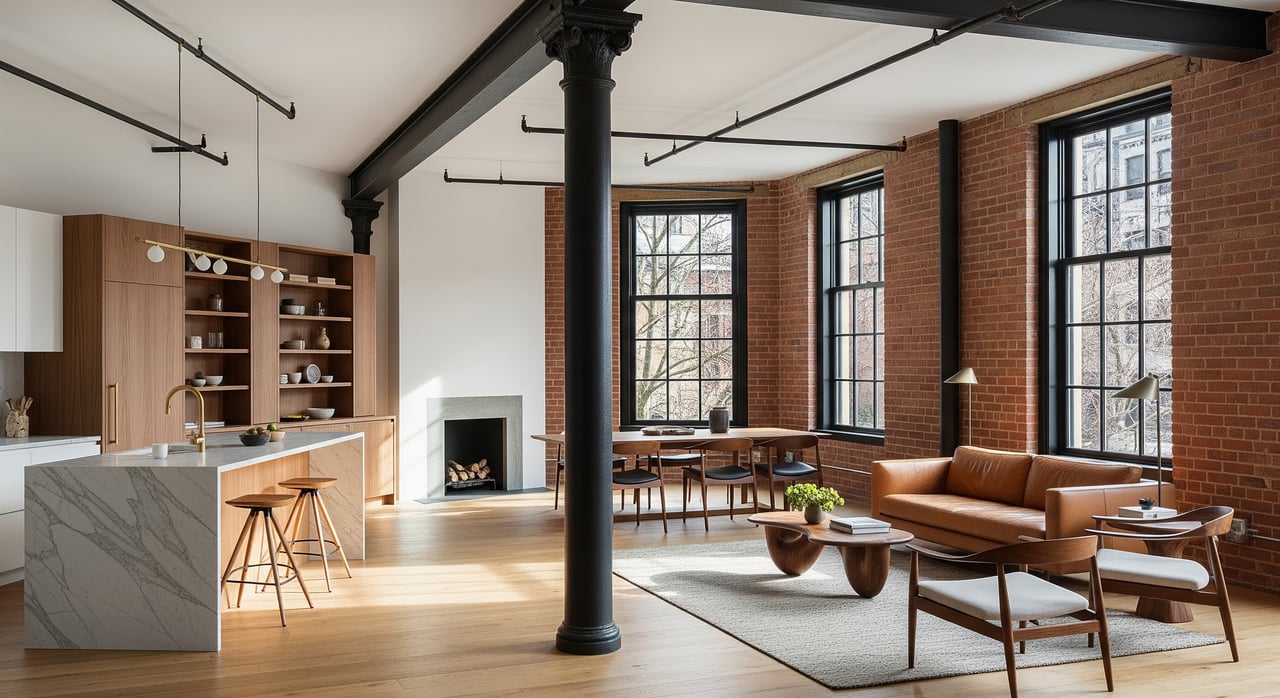
That said, the buyer pool is specialized. Classic Sixes tend to attract people who value prewar proportions and original details more than an open loft-style plan. Some buyers prefer modern open plan living, so sellers should understand local preferences and price accordingly.
Provenance and scarcity also matter. Well-preserved buildings by noted prewar architects can trade at higher prices per square foot. Scarcity of intact Classic Sixes near the parks or within landmark districts can create a premium. Within a building, the line, exposure, and floor can shift values even when square footage looks similar.
When evaluating price, look at both per-square-foot and total price. Track monthly maintenance, since high maintenance can dampen values. Compare true Classic Six comps within the same building or block when possible, and separate those from units that have been heavily reconfigured.
Buyer checklist for a UWS Classic Six
Use these quick checks to evaluate if a Classic Six is right for you.
Layout and light
- Which rooms face the street versus an interior courtyard?
- Are the living and dining rooms preserved and functional for how you entertain or work?
- Does the maid’s room have a window and egress suitable for regular use?
Function and policy
- Does the co-op allow in-unit laundry, and under what conditions?
- What are the sublet rules and short-term rental policies?
- Are there recent or planned special assessments?
Condition and risk
- Are walls plaster or drywall, and has any electrical modernization replaced knob-and-tube wiring?
- Any signs of water infiltration at windows or around ceilings?
- Are original floors level and in good condition?
Financials and documents
- Review recent board minutes, financial statements, and any reserve study.
- Request the alteration policy, proprietary lease, and house rules.
- Understand the underlying mortgage and any flip tax.
Seller checklist to maximize value
Position your Classic Six for the widest appeal while preserving what buyers pay for.
What to highlight
- Original moldings, high ceilings, and any decorative fireplace.
- The flow from foyer to living and dining, plus proximity to parks and transit.
- Building services, financial strength, and clear governance.
Smart updates
- Refresh kitchens and baths with quality materials while keeping original millwork where possible.
- Consider a partial kitchen opening or larger passthrough if the board allows it, and keep changes reversible when practical.
- Use photography that shows room proportions, original fenestration, and ceiling height.
Pricing and comps
- Price against true Classic Six comps in your building or on your block.
- If your unit is reconfigured, compare to similar reconfigurations rather than intact layouts.
- Watch maintenance trends and line-specific premiums for light and exposure.
Read UWS listings like a pro
Classic Six is both a layout and a signal. Listings might say “3BR/1.5BA with dining room” or “Classic Six with maid’s room,” but the essence is the same: six principal rooms with formal divisions. Bathrooms and closets do not count in the six. Focus on the floor plan to confirm the preserved dining room, two main bedrooms, and the smaller third bedroom near the kitchen.
If you see a large eat-in kitchen with no separate dining room, it may be a reconfiguration of a Classic Six. That can be a positive if you prefer open flow, but it is different from the historical layout and can influence value and comps. Ask how any changes were permitted and whether they are fully documented with the co-op and city filings.
Next steps with a trusted advisor
A Classic Six on the Upper West Side blends scale, craftsmanship, and neighborhood appeal. With co-op policies, renovation rules, and line-by-line differences across buildings, the details matter when you buy or sell. If you want guidance tailored to your timeline and goals, connect with senior brokers who know UWS co-ops, board processes, and the nuances of prewar layouts.
Ready to talk strategy for your Classic Six search or sale? Schedule a private conversation with the team that combines boutique client care with institutional-level execution. Reach out to The Anderson Ehrmann Team.
FAQs
What does “Classic Six” mean in Manhattan co-ops?
- A Classic Six is a prewar layout with six principal rooms: living room, formal dining room, kitchen, two main bedrooms, and a smaller third bedroom near the kitchen; baths and closets are not in the count.
How big are Classic Six apartments on the Upper West Side?
- Sizes vary by building and line, but you often see a broad range from roughly 1,000 to more than 1,800 square feet, with high ceilings that increase the sense of space.
Can you add a washer and dryer in a UWS Classic Six co-op?
- Many co-ops allow in-unit laundry only with board approval under an alteration agreement; requirements vary by building and may involve plumbing, venting, and schedule restrictions.
Are structural wall removals allowed in prewar UWS co-ops?
- Structural changes typically require architect or engineer plans, NYC Department of Buildings permits, and formal co-op approval; they are more complex and costly in prewar buildings.
What documents should you review before bidding on a UWS Classic Six?
- Ask for recent board minutes, financial statements, any reserve study, the alteration policy, proprietary lease, house rules, sublet rules, and information on the underlying mortgage and any flip tax.